
Randomness is an invisible but essential part of modern cybersecurity. It helps generate encryption keys, passwords, authentication codes, digital signatures, and secure communication sessions. When the randomness behind these systems is weak or predictable, even a strong encryption algorithm may become vulnerable. But what does “random” actually mean? Computers commonly produce randomness through pseudorandom number generators, or PRNGs. Quantum technologies introduce another option: quantum random number generators, or QRNGs. Between these two categories are physical systems that use electrical noise, environmental measurements, or chaotic behavior.
This raises an important question:
Can a classical chaotic device (PRNGs) produce true randomness, or does genuine unpredictability require quantum mechanics (QRNGs)?
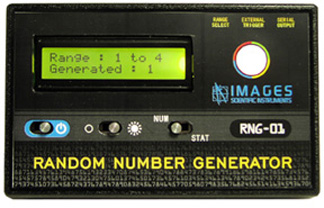
What Are PRNGs?
A pseudorandom number generator is a software-based system that uses a mathematical algorithm to produce a sequence of numbers that appears random.
The process begins with an initial value called a seed. Once the seed and algorithm are known, the resulting sequence can theoretically be reproduced.
This does not mean that PRNGs are inherently insecure. Cryptographically secure PRNGs are designed to make predicting future outputs extremely difficult. They are widely used because they are fast, scalable, and practical for everyday computing.
The National Institute of Standards and Technology, or NIST, provides guidance for deterministic random bit generators and the entropy sources used to initialize and refresh them. Modern random-number systems often combine a strong deterministic generator with carefully evaluated sources of entropy.
The important distinction is that a PRNG does not create unpredictability from nothing. Its security depends on several factors:
- The quality of its initial seed
- The strength of its algorithm
- How securely its internal state is protected
- Whether it is periodically reseeded
- The reliability of the entropy source supplying it
A well-designed PRNG can be highly secure. A poorly seeded or compromised PRNG can generate values that attackers may reproduce or predict.
What Are QRNGs?
A quantum random number generator derives randomness from the behavior of quantum systems. At SE&M Solutions, we also use a QRNG in our Quantum Trust ™ technology program.
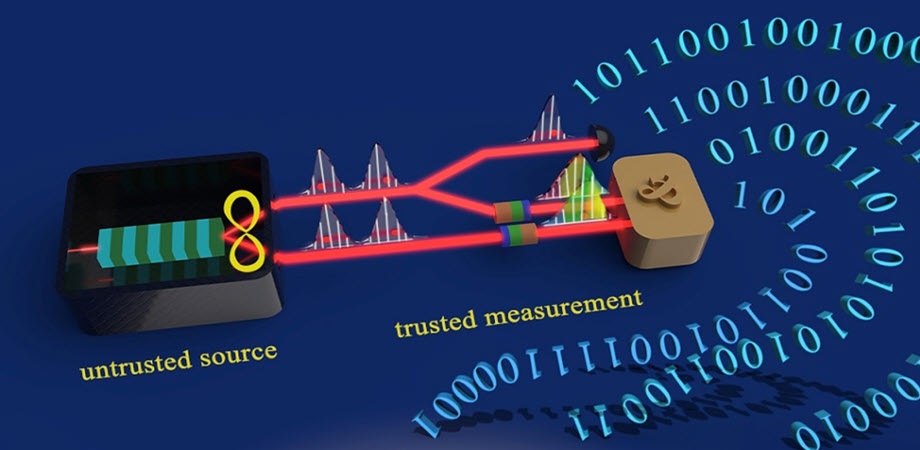
Depending on its design, a QRNG may measure photon paths, photon arrival times, vacuum fluctuations, quantum phase noise, or other quantum phenomena. The measurement results are converted into digital bits that can be used by computers and security applications.
Unlike a PRNG, a QRNG is not intended to produce a sequence through a deterministic mathematical formula. Its unpredictability comes from the probabilistic nature of quantum measurement.
This is why QRNGs are often described as sources of true randomness. Under accepted quantum theory, individual quantum measurement outcomes cannot be predicted with certainty before they occur.
However, the word “quantum” does not automatically guarantee that a device is secure.
Real QRNG hardware can still be affected by detector imperfections, environmental interference, manufacturing defects, classical electronic noise, implementation errors, or deliberate manipulation. A secure QRNG must therefore include continuous health monitoring, statistical evaluation, entropy estimation, and appropriate post-processing.
Researchers are also developing certifiable and device-independent approaches that provide stronger evidence that the generated output contains genuine quantum randomness.
Where Do Classical Chaotic Devices Fit?
A classical chaotic device uses a physical process that is extremely sensitive to its initial conditions.
Examples may include:
- Chaotic electronic circuits
- Oscillator timing variations
- Thermal or electrical noise
- Turbulent physical systems
- Mechanical or environmental measurements
- Laser systems operating in chaotic regimes
These systems may produce outputs that are difficult to predict in practice. A tiny change in the starting condition can lead to a dramatically different result. This behavior is commonly associated with the “butterfly effect.”
But chaos and randomness are not identical.
A classical chaotic system may be deterministic. Its behavior still follows physical equations, even when the system is too complicated to measure or calculate precisely. In theory, someone with complete knowledge of its conditions and dynamics might be able to predict its future output.
Therefore, a chaotic device may be an effective entropy source, but it should not automatically be treated as proof of fundamental randomness.
The security of such a device depends on whether its output remains unpredictable to an attacker who may understand the design, observe environmental conditions, influence the hardware, or obtain partial information about its internal state. NIST guidance similarly emphasizes that physical noise sources require detailed modeling, entropy estimation, health testing, and protection against predictable behavior.
Random-Looking Is Not the Same as Secure
A sequence can pass common statistical tests and still be predictable.
Statistical tests can identify patterns, bias, repetition, or unusual distributions. They cannot independently prove that a generator is secure or that its output is fundamentally random.
For example, a deterministic algorithm may produce millions of bits that look perfectly random. If an attacker discovers the seed or internal state, however, the attacker may be able to reconstruct the entire sequence.
Similarly, a classical physical device may produce noisy output. If most of that noise comes from a predictable component, its actual entropy may be much lower than expected.
This is why evaluating randomness requires more than reviewing the final output. Organizations must understand:
- Where the entropy originates
- What assumptions the generator makes
- Which components are deterministic
- How bias is removed
- How failures are detected
- Whether an attacker could observe or influence the source
- How the random values are stored, distributed, and consumed
The question is not simply, “Does this data look random?”
The more important question is, “What makes this data unpredictable?”

PRNGs and QRNGs Can Work Together
The conversation does not need to be framed as PRNGs versus QRNGs.
In many practical systems, the two technologies can complement each other.
A QRNG or another validated physical entropy source can provide fresh entropy. A cryptographically secure PRNG can then expand that entropy efficiently and deliver random values at the speed and volume required by applications.
This hybrid architecture can combine the physical unpredictability of a QRNG with the performance and scalability of a software-based generator. NIST’s random-bit-generation framework similarly describes constructions that combine validated entropy sources with deterministic random bit generators.
The value of a QRNG may therefore extend beyond directly generating every password, key, or token. It can strengthen the underlying entropy supply supporting many cryptographic processes.
PRNG vs QRNG: Why This Matters in a Post-Quantum World
Post-quantum cryptography focuses primarily on algorithms designed to resist attacks from both classical and quantum computers.
However, secure algorithms still require secure implementation.
A post-quantum encryption system can be weakened if its keys are generated from predictable or poorly managed randomness. The transition to quantum-resistant cryptography should therefore include an examination of the systems that generate, distribute, monitor, and protect entropy.
Organizations may need to ask:
- Where does our cryptographic randomness come from?
- How are our generators seeded and reseeded?
- Can we detect an entropy-source failure?
- Are multiple applications relying on the same source?
- Can random values be traced to an approved generator?
- How would compromised randomness affect our post-quantum systems?
Randomness should be treated as part of the security architecture, not merely as a background function hidden inside an application.
The Quantum Trust™ Approach
SE&M’s Quantum Trust™ program examines quantum readiness as a broader operational challenge. This includes post-quantum security, quantum technologies, cryptographic resilience, and the systems required to manage trusted sources of entropy.
Within this broader program, Quantum Trust EMS™ is being developed as an entropy management capability.
Rather than assuming that every source labeled “random” is equally trustworthy, an entropy management system can help create visibility into how randomness is generated and used. Depending on the architecture and stage of development, this may include capabilities such as:
- Connecting to classical and quantum entropy sources
- Monitoring source availability and performance
- Evaluating the health of connected sources
- Routing entropy to approved applications
- Supporting reseeding and failover strategies
- Recording operational events and source status
- Helping organizations manage entropy as a security resource
The objective is not simply to replace every PRNG with a QRNG. It is to understand which sources are available, how much trust can be placed in them, and how they should support the organization’s security requirements.
So, Is a Classical Chaotic Device Truly Random?
A classical chaotic device may provide valuable and highly unpredictable entropy. It may also be useful as one component within a secure random-number-generation system.
However, chaotic behavior by itself does not necessarily establish fundamental randomness.
Because many classical chaotic systems remain deterministic in principle, their security depends on the quality of the physical source, the accuracy of the entropy model, the protection of internal conditions, and the strength of the surrounding implementation.
A QRNG seeks to derive unpredictability from quantum measurement. A PRNG uses algorithms to expand an initial source of entropy. A classical chaotic device may sit between these categories as a physical entropy source whose trustworthiness must be carefully evaluated.
Each can play a role.
The real challenge is not choosing the most impressive label. It is creating a system in which randomness can be measured, monitored, validated, protected, and delivered where it is needed.
As organizations prepare for a post-quantum future, trusted entropy may become just as important as trusted encryption.
Because even the strongest lock can fail when its key is predictable.